The Cultural Friction Between IT Agility and Financial Predictability
For European mid-market enterprises (€50M to €500M in annual revenue), cloud infrastructure (AWS, Azure, GCP) has become the core operational backbone of digital delivery. However, it also represents one of the most volatile and unpredictable expenses on the P&L statement. Finance demands budget predictability and cost control, while IT and engineering teams prioritize speed, performance, and continuous deployment.
This misalignment creates a damaging operational rift: CFOs are routinely blindsided by variable monthly cloud bills carrying double-digit cost surges, while CTOs feel hamstrung by rigid financial controls that fail to understand modern cloud architecture. Effective Cloud Cost Governance (FinOps) is not about blindly cutting cloud spend—it is about creating shared accountability and aligning cloud engineering directly with enterprise business value.
What's Your IT Spend Score?
Benchmark your vendor contracts and discover your estimated savings range.
The 4 Pillars of Aligned Cloud Governance
Bridging the gap between Finance and IT requires transitioning from retroactive invoice processing to proactive cloud governance built upon four essential pillars:
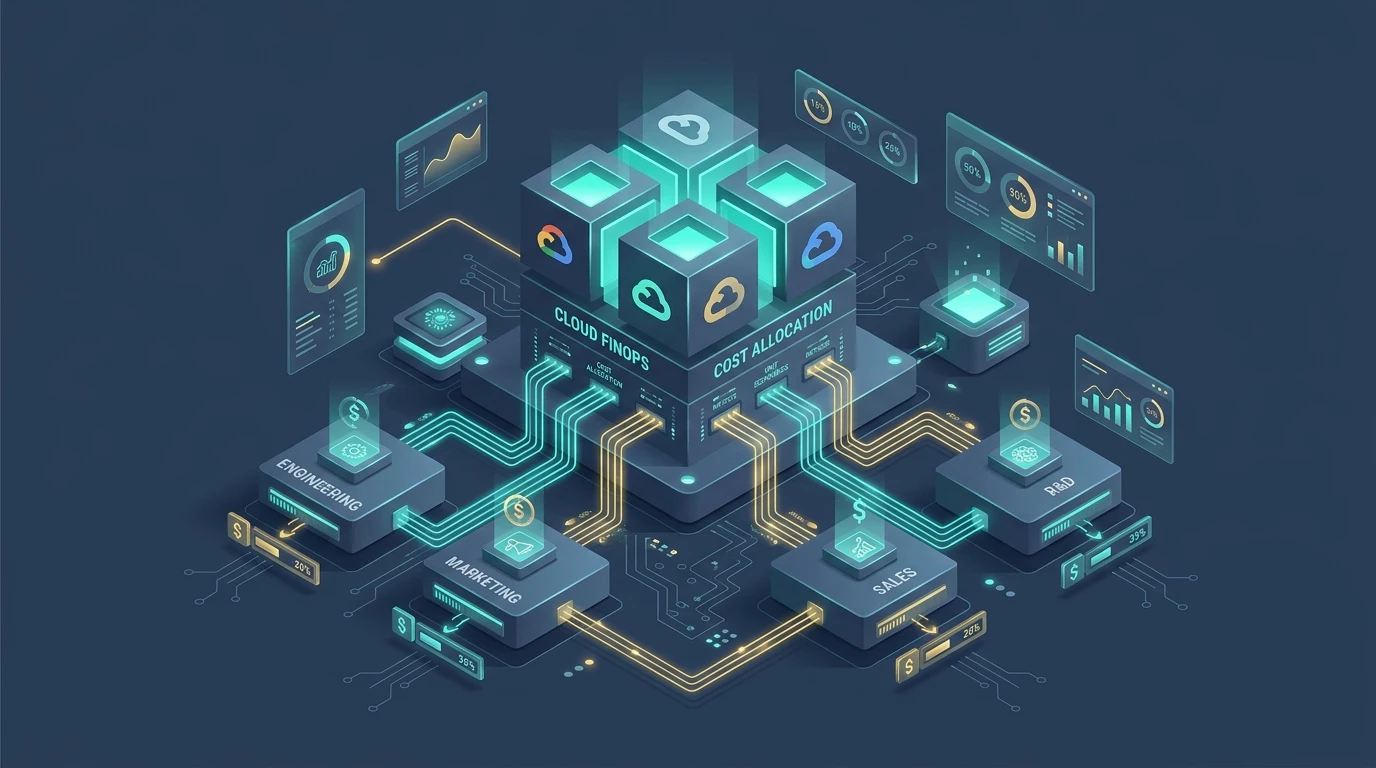
- Complete Resource Tagging & Allocation: Mapping 100% of cloud spend to specific business units, products, and cost centers through mandatory resource tagging across multi-cloud environments.
- Unit Economics over Gross Spend: Shifting the executive narrative from absolute cloud costs to unit economics (e.g., cloud cost per active customer, cost per transaction, or cost per deployed feature).
- Continuous Rightsizing & Idle Asset Reclamation: Implementing automated policies to terminate unattached storage volumes, scale down over-provisioned compute instances, and enforce non-production cluster scheduling.
- Commercial Commitment Optimization: Leveraging compute Savings Plans, Reserved Instances, and Committed Use Discounts by aligning IT capacity forecasting with procurement contract cycles.
Commercial Alignment: Translating Technical Savings into Contractual Power
Cloud cost management is too often treated as a purely technical engineering exercise. While rightsizing workloads and eliminating idle resources yields immediate quick wins, the largest long-term cost optimization lever exists at the commercial negotiation table with major cloud hyperscalers (AWS, Microsoft, Google).
Hyperscalers structure multi-year enterprise agreements (such as AWS EDPs or Azure MAC commitments) with aggressive spending minimums and steep shortfall penalties. Organizations without unified Finance-IT alignment risk either over-committing to secure superficial discount tiers, or paying inflated on-demand rates by underestimating their true capacity needs.
Forward-thinking CFOs and CIOs partner with independent, buyer-side procurement advisors to benchmark their cloud commitment tiers against peer enterprise deals. Conflict-free advisory ensures mid-market organizations negotiate custom rollover terms, growth protection clauses, and optimized baseline discounts without falling into vendor-favorable commitment traps.